

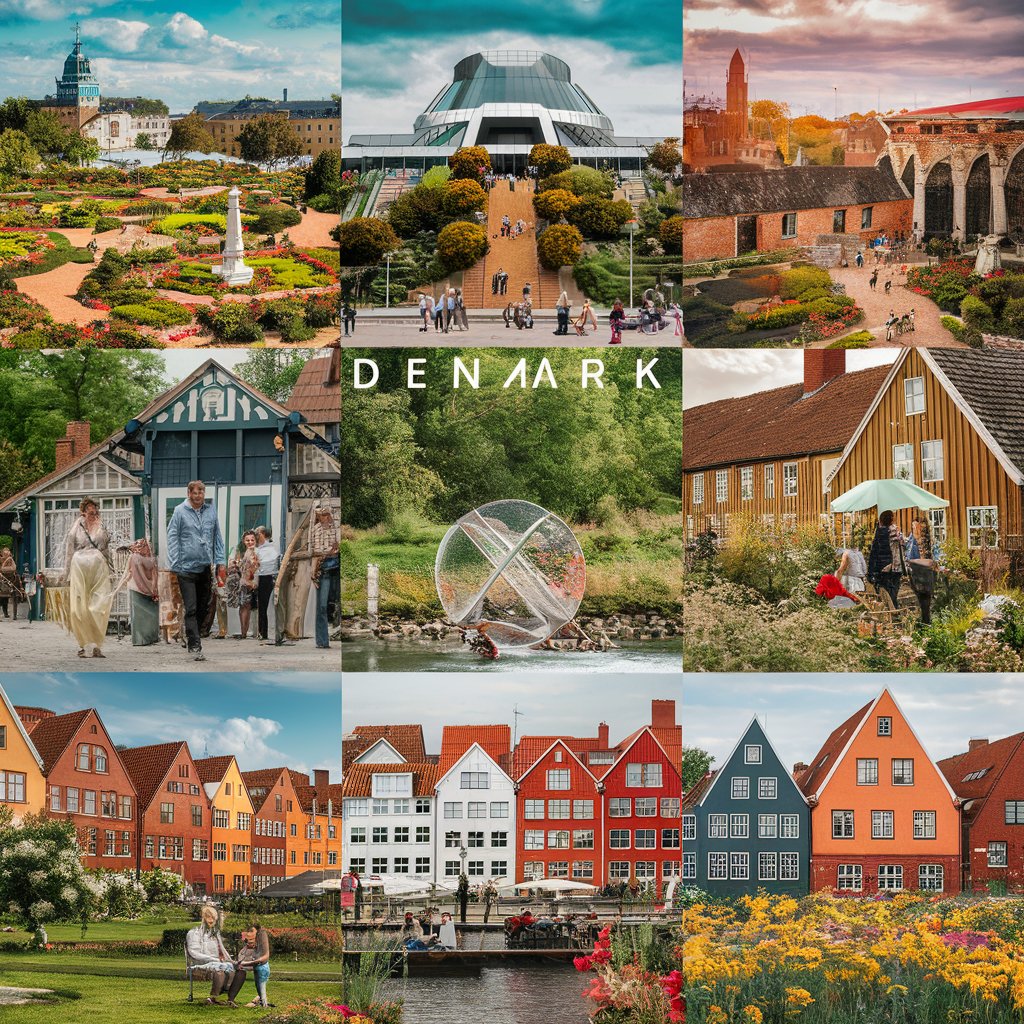
Denmark is a nation recognized worldwide for its balanced approach to progress, social welfare, and cultural preservation. We view Denmark as a country that successfully combines deep historical roots with forward-thinking innovation, creating a society that prioritizes quality of life, sustainability, and inclusive growth. Located in Northern Europe, Denmark plays a significant role in global economics, environmental leadership, and cultural influence. This article offers an in-depth exploration of Denmark, examining its history, social structure, economic model, and global impact through detailed and informative sections.
Geographical Landscape and Natural Environment
Denmark’s geography is defined by its unique composition of peninsulas and islands, surrounded by the North Sea and the Baltic Sea. We recognize that this coastal structure has significantly influenced the country’s maritime heritage, trade development, and environmental policies. The landscape is characterized by rolling plains, fertile farmland, and extensive coastlines rather than mountains or dramatic elevations. Denmark’s natural environment is carefully managed, with strong emphasis on land conservation, coastal protection, and biodiversity. This geographical balance supports agriculture, tourism, and renewable energy development while maintaining ecological stability.
Historical Foundations and National Identity
The historical evolution of Denmark has shaped a strong national identity rooted in resilience, unity, and adaptability. We understand that Denmark’s past includes Viking exploration, medieval monarchy, and gradual democratic reform. These historical phases contributed to the development of modern governance structures and a deep respect for institutional continuity. Denmark’s monarchy remains one of the oldest in the world, symbolizing stability while coexisting with a fully developed democratic system. History is preserved through architecture, literature, and education, reinforcing national pride and cultural continuity.
Political System and Governance Model
Denmark operates under a constitutional monarchy with a parliamentary democracy. We highlight that this system emphasizes transparency, accountability, and citizen participation. Political institutions are designed to encourage consensus-based decision-making, resulting in stable governance and long-term policy planning. Denmark’s public administration is widely regarded for its efficiency and low levels of corruption, which strengthens public trust. This governance model allows Denmark to implement comprehensive social programs while maintaining fiscal responsibility.
Economic Structure and Innovation
Denmark’s economy is built on a combination of market efficiency, innovation, and social responsibility. We observe that key sectors include manufacturing, pharmaceuticals, renewable energy, information technology, and agriculture. Denmark is particularly known for its leadership in wind energy, exporting technology and expertise worldwide. Small and medium-sized enterprises play a vital role in economic stability, supported by a regulatory environment that encourages entrepreneurship. Innovation is deeply embedded in the economy, driven by research, education, and collaboration between public and private sectors.
Social Welfare and Quality of Life
The Danish social welfare system is a cornerstone of national well-being. We recognize that universal healthcare, free education, and strong social security programs contribute to high living standards and low inequality. The system is funded through progressive taxation, ensuring equitable access to essential services. Denmark consistently ranks high in global quality-of-life indexes due to its focus on work-life balance, social trust, and community well-being. This model demonstrates how economic productivity and social protection can coexist effectively.
Education System and Knowledge Culture
Education in Denmark is designed to foster critical thinking, creativity, and lifelong learning. We note that the system emphasizes student engagement, collaborative learning, and practical application of knowledge. Higher education institutions are globally respected, attracting international students and researchers. Education is viewed not only as a pathway to employment but also as a foundation for active citizenship and social responsibility. This knowledge-based approach supports innovation and adaptability in a rapidly changing global environment.
Cultural Values and Everyday Life
Danish culture places strong emphasis on simplicity, equality, and community. We understand that the concept of “hygge” reflects a cultural appreciation for comfort, togetherness, and well-being in everyday life. Art, design, and architecture are integral to Danish identity, characterized by functional aesthetics and minimalism. Cultural traditions are preserved while remaining open to global influences, creating a dynamic and inclusive cultural landscape.
Environmental Leadership and Sustainability
Denmark is widely recognized as a global leader in environmental sustainability. We highlight that national policies prioritize renewable energy, carbon reduction, and sustainable urban planning. Cities are designed to support cycling, public transportation, and green spaces, reducing environmental impact while enhancing quality of life. Denmark’s commitment to sustainability extends to food production, waste management, and climate innovation, setting international benchmarks for responsible development.
Denmark’s Role in the Global Community
On the international stage, Denmark plays an active role in diplomacy, humanitarian efforts, and global cooperation. We observe that the country contributes to peacekeeping missions, development aid, and climate initiatives. Denmark’s reputation for reliability and ethical leadership strengthens its influence within international organizations and partnerships. This global engagement reflects a commitment to shared responsibility and long-term global stability.
Conclusion: Understanding Denmark’s Enduring Appeal
Denmark stands as a compelling example of how economic strength, social equality, and environmental responsibility can be integrated into a cohesive national model. We recognize that its success is rooted in strong institutions, cultural values, and a forward-looking mindset. By balancing tradition with innovation, Denmark continues to inspire nations seeking sustainable and inclusive development in an interconnected world.